Some of the most striking images in glamour photography borrow from the same visual playbook that made 1890s Paris unforgettable — the layered collision of classical ballet structure and theatrical lingerie. This guide breaks down exactly how to combine a 5-layer tulle tutu with modern corset, rhinestone fishnet, and sequin pieces into compositions that feel both historically grounded and boldly contemporary.
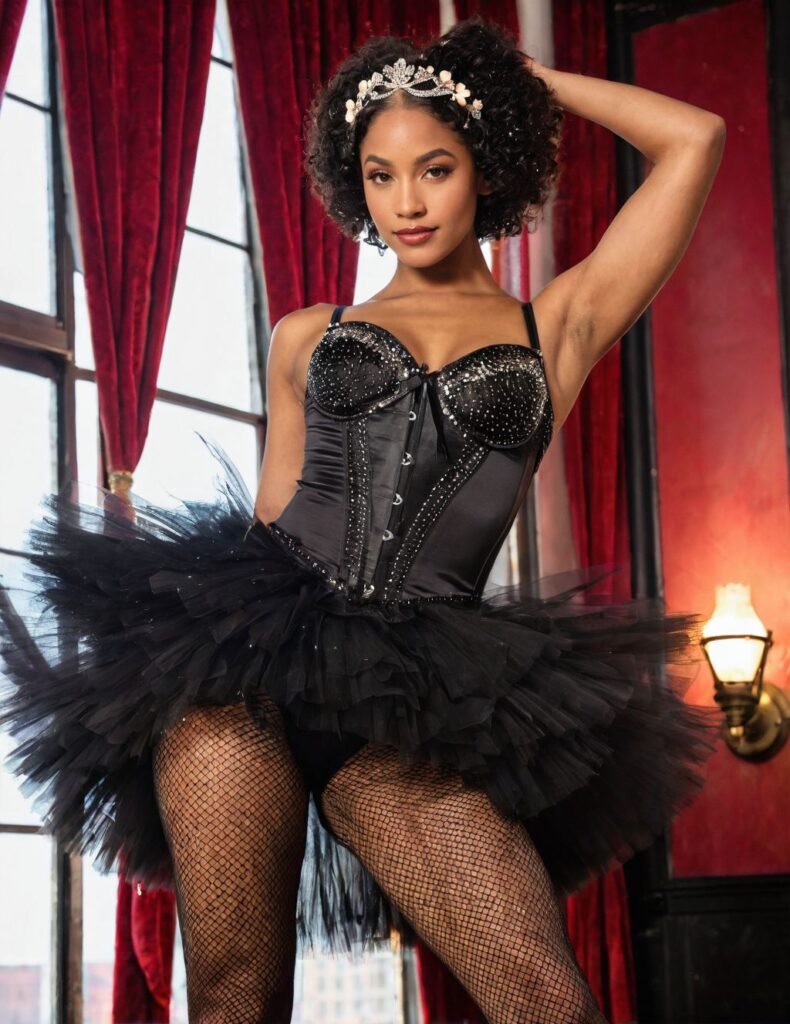
Why Belle Époque Works for Portland Inspo Shoots
The Belle Époque (1871–1914) was the moment ballet’s visual language went fully public. Paris music halls like the Moulin Rouge (opened 1889) and the Folies-Bergère stripped away formal performance narrative and kept only what photographed and illustrated best: the tutu silhouette, the cinched waist, the glittering leg line, and the high-extension pose held for maximum effect.
Toulouse-Lautrec documented it all through a revolutionary graphic lens — bold silhouettes, single dominant diagonals, flat color fields, radical cropping. That same compositional economy is exactly what performs on Instagram and in portfolio work today. The era’s visual logic was built for impact at distance and at scale — which means it also works at scroll speed.
Portland’s overcast light and studio culture make this theme particularly accessible. The era’s iconic warm amber gaslight is easily recreated with warm LED panels, and the muted Pacific Northwest palette actually enhances — rather than competes with — rich crimsons, blacks, and cream tulle.
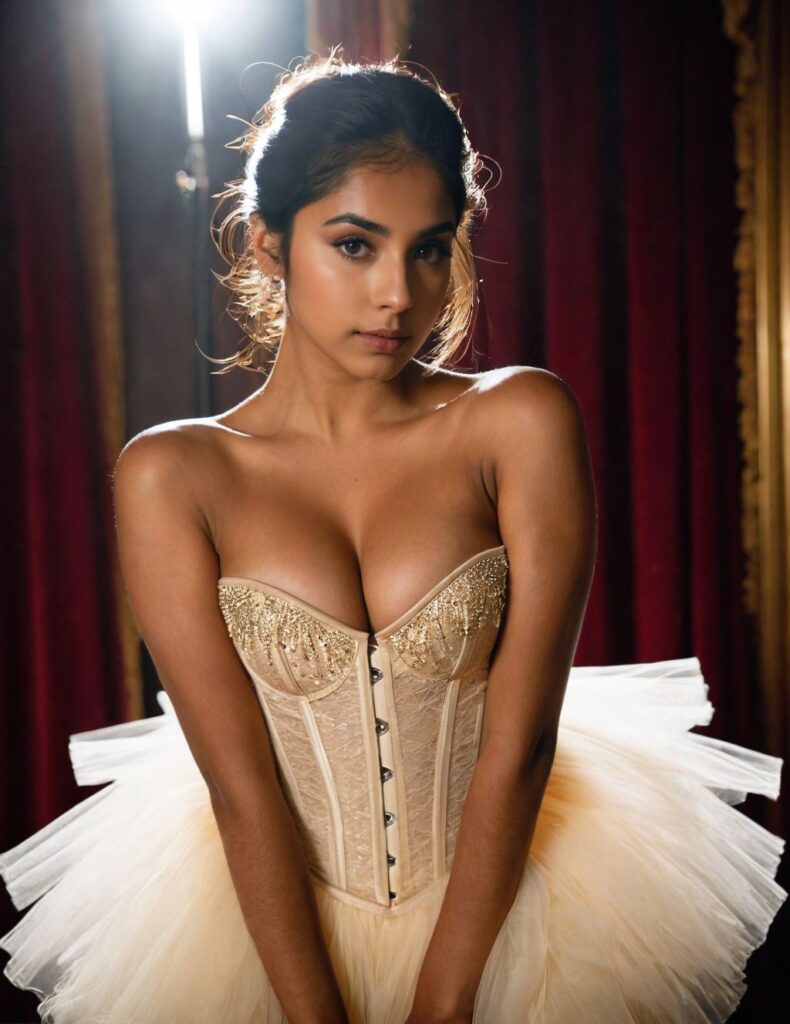
The Ensemble: Five Pieces, One Coherent Silhouette
Your five modern pieces map directly onto the four visual zones of the Belle Époque stage costume. Understanding each zone is the foundation of compositional control:
| Visual Zone | Period Original | Modern Piece | Compositional Function |
|---|---|---|---|
| Bust | Sequin/fringe bodice with coin trim | Sequin Tassel Belly Dance Bra | Top anchor; tassels imply motion in a still frame |
| Waist | Steel-boned external corset | Lace Boned Corset Bodysuit | Structural core — all pose geometry radiates from here |
| Tutu horizon | Short classical tutu, the horizontal plane | 5-Layer Tulle Tutu Skirt | Divides the frame; makes vertical leg extension maximally legible |
| Legs (standard) | Black seamed silk stockings | Rhinestone Fishnet Tights | Mid-length texture; catch side light beautifully |
| Legs (elevated) | High stocking meeting corset hem | High-Waist Sparkly Fishnets | Unbroken glittering diagonal from hip to pointed toe |
Layering sequence matters. Corset bodysuit first as the structural base, tutu at natural hip height second, sequin bra as the final top layer. This creates the zone separation that makes each compositional element readable independently in the frame.
Compositional Posing: Six Core Poses
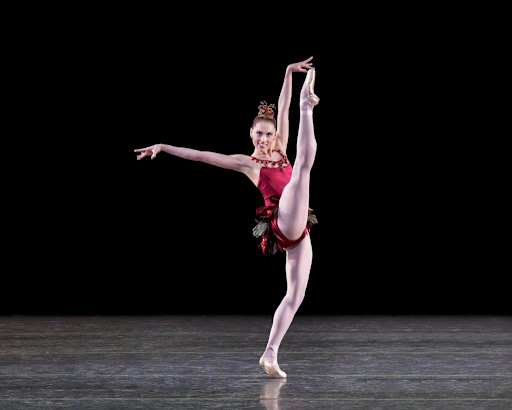
1. The Grand Battement — Full Ensemble
Isabella LaFreniere performing grand battement in red tutu
The signature pose of this entire visual tradition. One leg planted and straight, the working leg swings to maximum height in a full extension.
Why it works: As the leg rises, the tutu lifts asymmetrically on the raised side and drops on the standing side — this asymmetry is the visual event. The rhinestone fishnets create a continuous luminous diagonal from hip to pointed toe that anchors the entire composition. The corset keeps the torso composed against the explosion of the lower body — calm above, kinetic below — which is the exact tension that defined Toulouse-Lautrec’s poster silhouettes.
Framing: Shoot from a low angle (lens at knee height), tilted slightly upward. This reproduces the footlight perspective of the music-hall stage and makes the tutu fan into the upper frame. Leave room above the raised foot — that negative space is compositionally active, not empty.
2. The Attitude — Three-Quarter Turn
Standing leg straight or in demi-plié, working leg lifted behind with a soft bent knee. Turn the subject 45 degrees from the camera.
Why it works: The attitude is three-dimensional in a way the arabesque and battement are not. The bent knee creates depth — one part of the body moves toward the camera, another away — and the three-quarter turn lets the tutu fan into its widest visible profile. This is the pose for showcasing the corset’s hourglass construction at its most dramatic.
Framing: Head-to-toe frame, subject off-center toward the dominant direction of the raised leg. The empty side of the frame becomes visual breathing room, echoing the asymmetric stage space in Lautrec’s compositions.
3. The Cambré Backbend — Corset Feature Pose
A controlled deep arch backward, arms opening wide, head released.
Why it works: The cambré showcases the corset’s boning architecture at maximum drama. The spinal curve from hip to crown becomes the primary compositional line. Rhinestone fishnets catch side lighting along both legs, creating a symmetrical luminous base that grounds the upward arch and directs the eye inward and upward through the body.
Framing: Frame from mid-thigh to crown. The corset’s lace panels become the compositional center. Shoot with the main light from the side to sculpt the arch’s depth — front-flat lighting erases the entire three-dimensional quality of the pose.
4. The Tassel Burst — Sequin Bra in Motion
A sharp side tilt or shoulder roll captured mid-movement, body weight shifting quickly.
Why it works: The sequin tassels extend the visual boundary of the bust beyond its physical edge, implying movement in a still frame exactly as period costume fringe did in gaslit stage photography. The decisive frame is one or two shots after the peak of the movement — when the body has settled but the tassels are still traveling. Shoot in burst mode through the motion sequence.
Framing: Tighter crop — mid-torso to crown. Let the tassels break the frame edge on at least one side. This cropping technique is directly borrowed from Lautrec, who routinely cut his figures at the frame boundary to create tension and imply a larger space beyond the image.
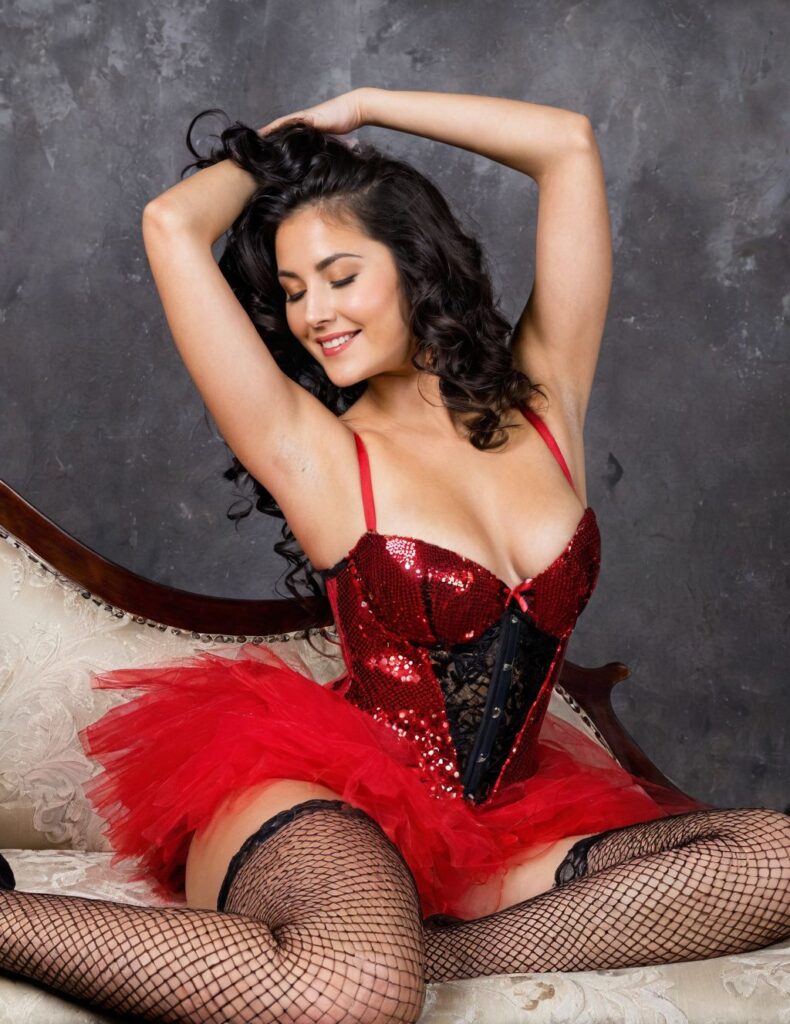
5. The Seated Floor Stretch — Mirror and Depth
Legs in second position (wide V), tutu hiked or spread around the body like a skirt bloom, weight on both hands behind.
Why it works: The tutu, when the subject is seated on the floor, becomes a full circular volume around the body — a compositional frame within the frame. The rhinestone fishnets create strong graphic texture lines radiating outward from the waist, organizing the lower portion of the image into a formal pattern. This pose is ideal for overhead or near-overhead framing.
Framing: Shoot from directly above (ladder or elevated position) for a pure graphic composition, or from a low front angle to capture the tutu’s volume as a horizon line with the subject rising from it.
6. The Profile Silhouette — Lautrec’s Signature
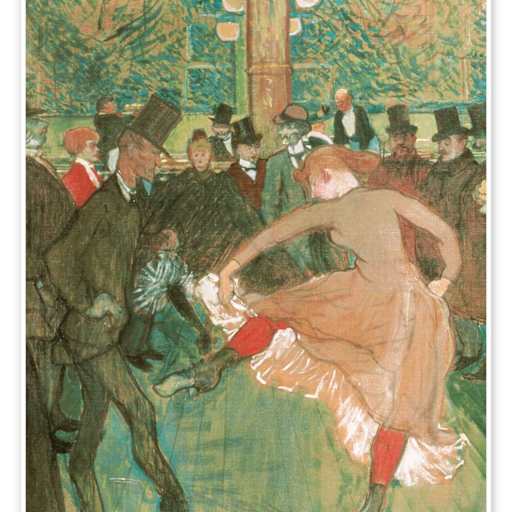
Henri de Toulouse-Lautrec painting of can-can dancers in crowded music hall with raised skirts and top hats
Subject turned fully sideways to camera, one arm raised, leg in low arabesque or forward tendu, tutu in full side profile.
Why it works: This is the direct application of Toulouse-Lautrec’s graphic reduction — the body becomes a pure silhouette organized around a single dominant diagonal line. The tutu’s circumference reads as a perfect disc from the side. All rhinestone and sequin detail disappears into the silhouette, and the composition becomes about shape alone.
Framing: Expose for the background (slightly brighter than the subject) to push the subject toward true silhouette. A rim light from directly behind the subject preserves the tutu’s edge definition.
Lighting for the Belle Époque Aesthetic
The era’s defining light sources are both historically accurate and practically achievable in a Portland studio:
Primary: Warm Amber Side Light (The Gaslight Equivalent)
Place your main light source — a softbox or large LED panel — at 45 degrees to the side and slightly elevated, set to 3000–3500K warm white. This recreates the gaslight quality of the Moulin Rouge wings: it sculpts the corset’s boning, makes rhinestones glow rather than spike, and wraps the tutu’s tulle in warmth without flattening it.
Secondary: Low Footlight (The Stage Floor Source)
A low-placed warm LED strip or panel at foot level, shooting upward, creates the under-lit shadow pattern that makes fishnet layers luminous from below and separates the tutu’s lower tiers into distinct planes. In period illustrations and photographs, this was the defining quality of music-hall lighting. It reads as theatrical and intentional rather than accidental.
Rim/Separation Light: Cool Rear Light
A single harder light from directly behind and above the subject — set cooler (5000–5500K) — creates the crisp halo rim that separates the subject from the background and keeps the tutu’s edge sharp. This contrast between warm front light and cool rim light is the photographic equivalent of Lautrec’s flat color fields: the subject reads as a complete, self-contained graphic element against the background.
Portland-Specific Consideration
Pacific Northwest light runs naturally cool (6000K+ on overcast days). For this theme — which depends on warmth for its Belle Époque atmosphere — add warmth through your key light rather than relying on natural window light, or correct toward 3200–3500K in post. Portland’s diffused overcast makes excellent fill light when used through a sheer curtain at distance, but it needs a warm artificial key to anchor the period feel.
Background and Set Design
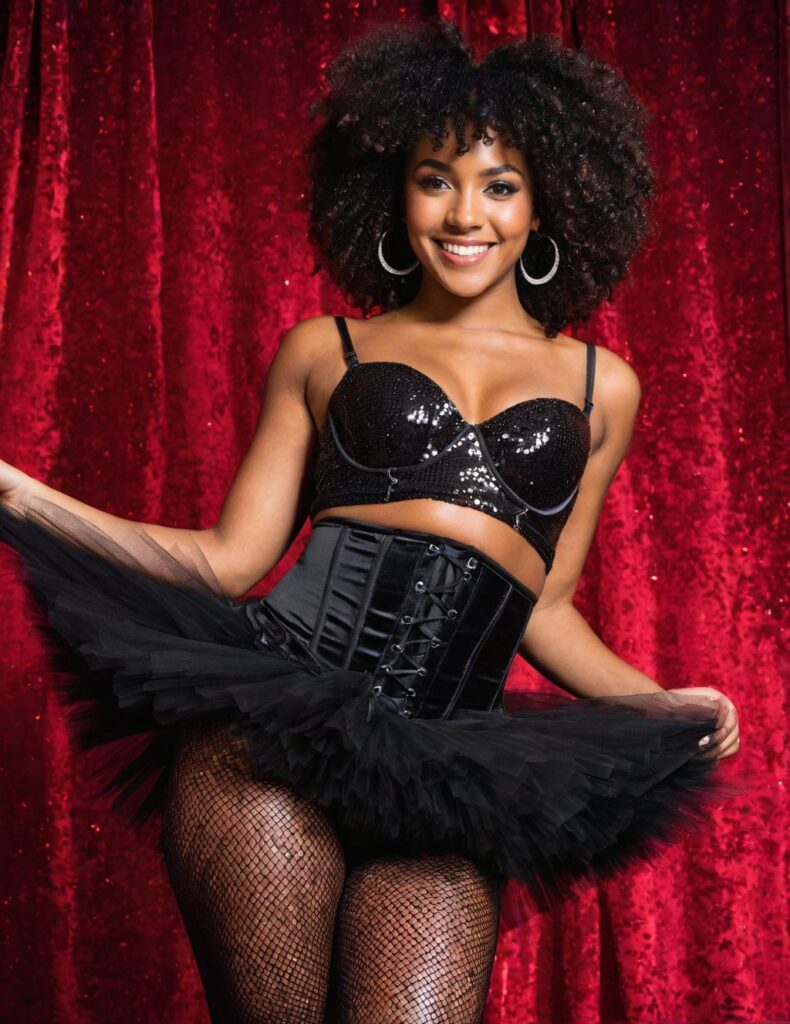
Black lingerie against deep red with warm amber key light is the precise tonal palette of the era’s most iconic imagery — and it photographs with exceptional richness under warm studio light.
#PDXBeauty #PortlandGlam #glamourphotography #boudoirphotography #portraitphotography #feminineenergy #bodypositivity #WomenOfPDX #portlandphotographer #creativeportrait
Ready to explore this theme? Contact me to bring your authentic self into a Belle Époque-inspired session — no experience needed, just curiosity and willingness to create something beautiful together.
This post contains affiliate links. If you buy through them, I may earn a commission.
