Secret Scroll-Stopping Creators Know Color Does More Than Flatter—It Sells
You can have perfect lighting, a ring light that costs hundreds, and flawless skin prep. But if your lingerie and makeup colors are fighting each other on camera, your content won’t stop the scroll. Color theory isn’t just for art school—it’s the secret weapon that transforms ordinary intimate content into photography that makes people pause, engage, and convert into followers.
After photographing hundreds of models and creators in lingerie, I’ve watched women discover their signature colors—the specific shades that make their skin glow under camera light, create cohesive Instagram grids, and build instantly recognizable personal brands. This guide breaks down the color science that separates amateur content from professional portfolios, grounded in both technical photography principles and 2026’s hottest lingerie trends.
Whether you’re a creator building your content business or a beauty professional learning to photograph your work, understanding color theory gives you control over how your images read emotionally, technically, and commercially.
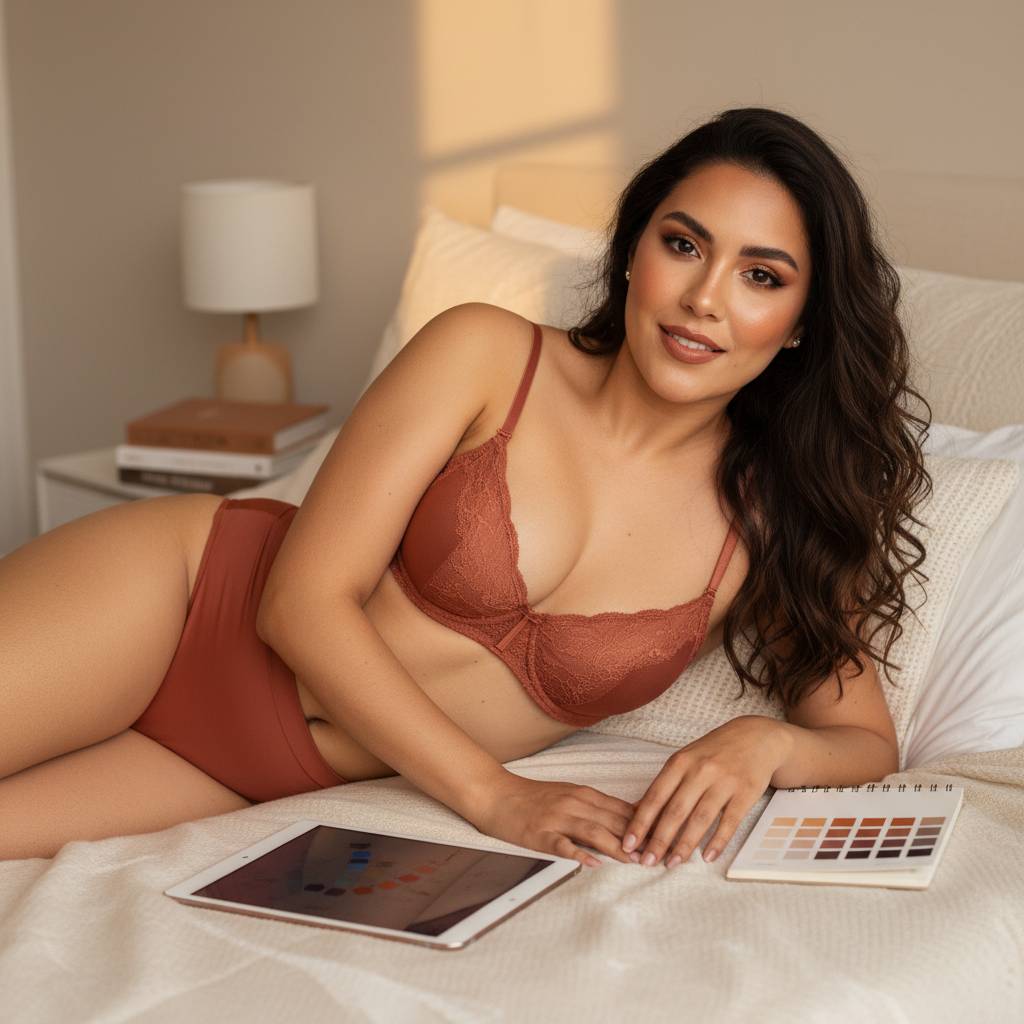
Understanding Skin Undertones: Your Color Foundation
Before buying another lingerie set or lipstick, you need to identify your undertone—the constant “base note” beneath your skin tone that determines which colors make you glow versus which make you look washed out on camera.
The Quick Professional Test
The Vein Check: Look at the veins on your inner wrist under natural daylight (not yellow indoor bulbs or harsh fluorescent).
- Cool Undertones: Veins appear blue or purple. You’ll radiate in silver jewelry, berry tones (plum, wine, mauve), emerald greens, sapphire blues, and cool pinks like fuchsia.
- Warm Undertones: Veins appear green or olive. You glow in gold jewelry, warm reds (coral, rust, brick), oranges, warm earth tones, and caramel shades.
- Neutral Undertones: You see both blue and green, or your veins are difficult to classify. Lucky you—you can pull off both warm and cool color families.
Why Undertones Matter More Than Skin Tone
Two creators with the same skin tone can have opposite undertones. A light-skinned woman with cool undertones needs completely different colors than a light-skinned woman with warm undertones. Similarly, deep skin tones can be warm or cool—melanin level doesn’t predict undertone.
Photography Reality: Your camera amplifies color interactions. A slightly “wrong” lipstick shade that looks fine in person can make your entire face look gray or sallow in photos. Getting undertones right is the single fastest way to improve your content quality without buying new equipment.
Portland’s Light Challenge
Pacific Northwest light is predominantly cool—especially on our famously overcast days. This means:
- Warm undertones: You may need to add warmth through makeup or color-corrected lighting to prevent looking gray on camera
- Cool undertones: Portland’s natural light is your best friend—you’ll glow effortlessly in window light
- Neutral undertones: You have flexibility but should still test both warm and cool lighting setups
My studio tip: I always shoot test frames under your planned lighting before the full session begins. One quick selfie test in your actual shooting environment saves entire photo session regrets.
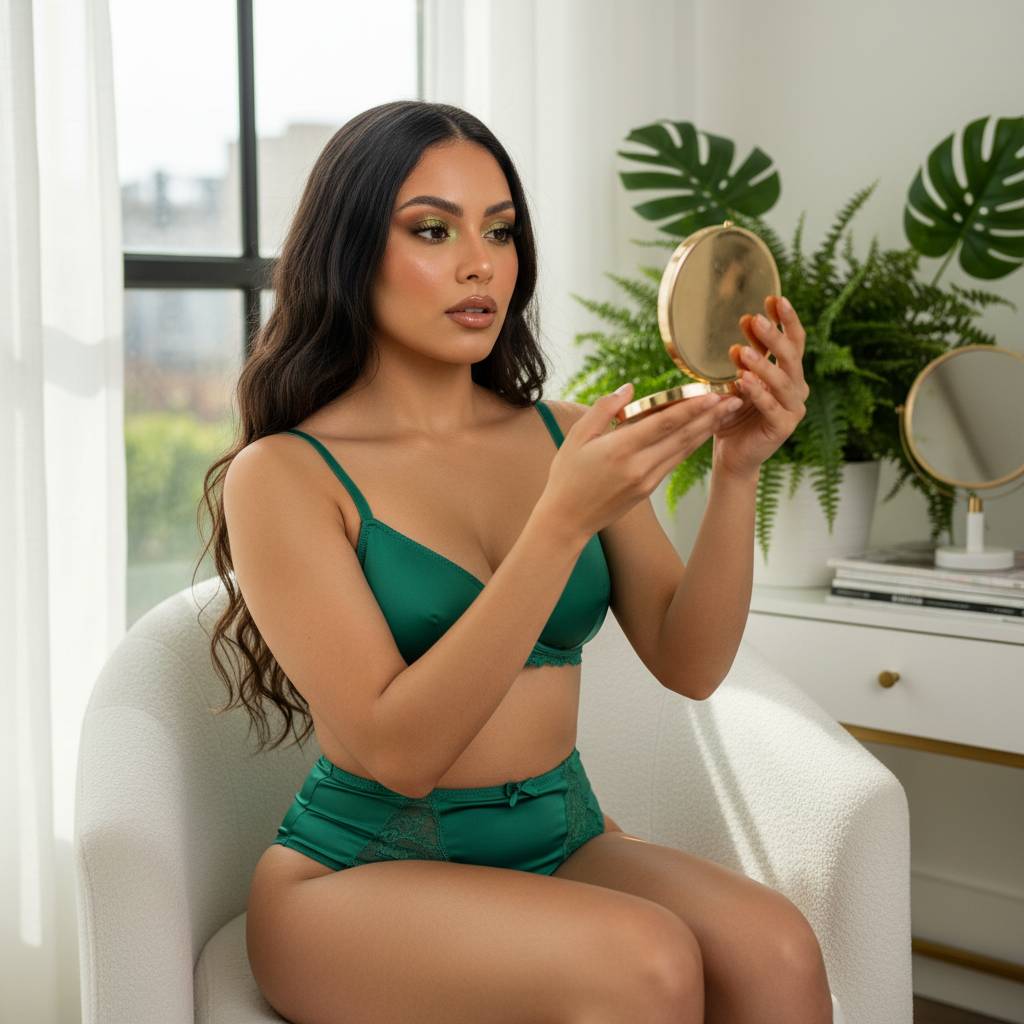
2026 Lingerie Color Trends That Photograph Beautifully
Staying current with color trends matters for creators—brands want to partner with people whose content feels fresh and relevant. Here’s what’s dominating lingerie collections and Instagram feeds in 2026.
Bold Colors Are Back
The Trend: After years of neutral minimalism, 2026 lingerie is all about bold, saturated color. Pink lingerie saw a 600% increase in social media buzz, with shades ranging from soft powder pink to vibrant fuchsia dominating Spring/Summer collections.
What This Means for You:
- Jewel tones (emerald, ruby, sapphire, amethyst) create luxurious, high-end aesthetics that photograph with rich depth.
- Electric brights (hot pink, tangerine, chartreuse) grab attention in fast-scrolling feeds.
- Deep reds and burgundies remain timeless—sexy, confident, and universally flattering. beautyinboudoir
Portland Angle: Our lingerie trends post notes that red and pink are the standouts for Portland photo shoots, “from soft blush and fuchsia to deep scarlet”. These colors photograph beautifully against Portland’s muted urban backgrounds and soft natural light. pdxinspo
The Return of Prints and Patterns
Animal prints (leopard, zebra), vintage florals, and bold patterns are having a Y2K-inspired revival. For creators, patterns add visual interest but require careful coordination—your makeup should stay neutral to let the print be the star. glamour
See our retro lingerie styling guide for how patterns photograph on diverse body types.pdxinspo
Comfort Colors Aren’t Boring Anymore
The wellness movement pushed “cozy luxury” into lingerie—buttery-soft pieces in sophisticated neutral shades like mocha, champagne, sage green, and dusty rose. These colors photograph as elevated and intentional, perfect for lifestyle and “getting ready” content.
Mastering Color Harmonies for Instagram-Worthy Content
Professional-looking content uses established color theory principles from the color wheel. These aren’t arbitrary rules—they’re based on how human eyes process color relationships.
Monochromatic Harmony (The Editorial Choice)
What It Is: Using different shades and tints of a single color family—for example, burgundy lingerie with wine-colored lips, deep red nails, and mauve background.
Why It Works: Monochromatic palettes create a sophisticated, high-end editorial feel. They’re incredibly easy for viewers to process visually, which means your image registers as “professional” immediately.
Best For:
- Brand partnership content where the lingerie product needs to be the absolute star
- Building a cohesive Instagram grid that looks curated and intentional
- Creators wanting a minimalist, luxury aesthetic
Portland Creator Tip: Monochromatic burgundy or forest green against Portland’s gray skies creates moody, Pacific Northwest vibes that feel geographically authentic.
Analogous Harmony (The Natural Choice)
What It Is: Using colors next to each other on the color wheel—like pink lingerie with red roses and coral lips.
Why It Works: Analogous colors feel naturally harmonious because they share undertones. This creates content that feels serene, romantic, and effortlessly beautiful—like colors found in nature.
Best For:
- Soft, feminine aesthetics
- Pregnancy and maternity content (see our maternity creators guide)pdxinspo
- Lifestyle content that emphasizes comfort and authenticity
- Creators building “soft girl” or romantic personal brands
Complementary Harmony (The Bold Choice)
What It Is: Using colors opposite each other on the wheel—like emerald lingerie against warm orange sunset backgrounds, or purple pieces with yellow accents.
Why It Works: Complementary colors create maximum visual contrast and “pop.” Your image practically vibrates with energy, which is incredibly effective for stopping scrolls.
Best For:
- TikTok and Reels where you have 1.5 seconds to grab attention
- Bold, confident personal brands
- Content creators who want to stand out rather than blend in
Warning: Complementary harmony is powerful but can feel aggressive if overused. Balance bold color pairings with neutral makeup and simple styling.
Technical Lighting and Color Temperature
Here’s where photography gets scientific. Light has its own “color” measured in Kelvin (K), and it dramatically changes how your lingerie and makeup appear on camera.
Understanding the Kelvin Scale
| Light Source | Color Temperature | Effect on Lingerie/Makeup |
|---|---|---|
| Portland Overcast | 6500K – 7500K | High blue content; makes cool colors (blues, purples, silvers) pop dramatically but can make warm undertones look gray |
| Daylight | 5500K – 6500K | Balanced “true color” rendering; ideal for accurate makeup photography |
| Ring Light (Adjustable) | 3200K – 5600K | Most professional ring lights let you adjust; 5500K mimics daylight for accurate skin tones |
| Golden Hour | 2000K – 3000K | Rich, warm glow; enhances reds, golds, and warm skin beautifully but turns cool blues muddy |
| Indoor Warm Lamps | 2700K | Very yellow/orange; avoid for makeup accuracy but creates “cozy” lifestyle vibes |
Practical Application for Creators
If your lingerie is a cool-toned lilac or periwinkle: Shoot under cooler light (overcast Portland daylight or 5500K+ ring light setting). Warm indoor lamps will turn your purple gray or muddy.trendalytics
If your lingerie is warm-toned coral or rust: Embrace warm light (golden hour or 3200K ring light). Cool light will make warm colors look dull and less saturated.
For accurate makeup rendering: Always use 5500K “daylight balanced” lighting when your face is the primary focus. This ensures your foundation matches your neck, your lipstick reads true to color, and your eye makeup doesn’t photograph differently than intended.profoto
Portland-Specific Consideration: Our frequent cloud cover acts as a natural softbox, diffusing light beautifully. But it also pulls cool (6000K+), which means warm undertones need to add warmth through makeup choices or slight color correction in editing.
Coordinating Makeup with Lingerie: The “Hero Color” Rule
Most creators make this mistake: they choose a “going out” makeup look that fights with their lingerie color instead of supporting it. Professional styling follows the “hero color” principle.
The Hero Color Framework
Your lingerie is the hero—it’s the most saturated color and the primary subject. Everything else (makeup, nails, props, background) should either:
- Support the hero (stay neutral so lingerie dominates)
- Echo the hero (pick up the same color family in softer intensity)
- Complement the hero (use established color theory relationships)
Never compete with your hero color by introducing equally saturated unrelated colors.
Makeup Coordination by Lingerie Color
Pink/Blush Lingerie:angelafriedman+1
- Makeup: Rose-toned blush, soft pink or nude lips, champagne highlighter
- Nails: Nude, soft pink, or clear
- Avoid: Purple or red tones that shift the color story
Emerald/Jewel Green Lingerie:beautyinboudoir+1
- Makeup: Peach or coral blush (warm), gold highlighter, nude or soft berry lips
- Nails: Gold, nude, or deep burgundy
- Avoid: Cool pink tones that clash with green
Deep Red/Burgundy Lingerie:zestyorangephoto+1
- Makeup: Matching red lip OR nude lip (never purple/pink), warm bronze or neutral eye, subtle blush
- Nails: Classic red, nude, or black
- Avoid: Cool-toned pinks that fight the warm red
Black Lingerie:zestyorangephoto
- Makeup: Literally anything—black is neutral. Bold red lip, smoky eye, natural nude—all work
- Nails: Any color coordinates with black
- Freedom: This is your chance to experiment without color theory constraints
Neutral/Nude Lingerie:beautyinboudoir
- Makeup: Focus on your natural coloring; enhance skin, define eyes, natural lip
- Goal: Timeless, classic, romantic—let YOU be the focus, not color
- Avoid: Overly trendy or costume makeup that feels disconnected
See our balayage guide for how hair color interacts with your overall color palette.pdxinspo
Platform-Specific Color Psychology
Different social platforms favor different color aesthetics due to both algorithm behavior and audience expectations.pdxinspo
Instagram: The Curated Grid
Color Preference: Instagram’s predominantly female audience and “aspirational lifestyle” culture favors:
- Cool, clean tones
- High brightness and contrast
- Cohesive, consistent color palettes across posts
- Soft pastels or sophisticated jewel tonesbeautyinboudoir+1
Strategy for Creators: Choose 2-3 signature colors and rotate them consistently. When your grid looks curated and intentional, you signal professionalism that attracts brand partnerships.pdxinspo
Portland Context: The Pacific Northwest aesthetic (muted tones, soft light, romantic vibes) performs exceptionally well on Instagram’s platform. Lean into moody burgundies, forest greens, and dusty roses against gray urban backgrounds.
TikTok: The Authentic Feed
Color Preference: TikTok’s younger, trend-driven audience and fast-paced video format favors:
- Warmer, saturated colors
- High contrast (bold colors against contrasting backgrounds)
- Electric brights that grab attention in 1.5 secondsinstyle+1
- Playful, unexpected color combinations
Strategy for Creators: Don’t be afraid of bold, bright color choices that would feel “too much” for Instagram. TikTok rewards visual boldness.pdxinspo
2026 Trend Alert: Miami teal, Vegas violet, and canary yellow are dominating TikTok fashion content —consider incorporating these trendy shades if your brand allows.instyle
YouTube: The Storytelling Platform
Color Preference: YouTube’s longer-form content and diverse audience demographics favor:
- Realistic, skin-true colors (5500K lighting is essential)
- Balanced saturation (not oversaturated or washed out)
- Professional but approachable aesthetics
- Consistency across thumbnails for brand recognition
Strategy for Creators: Prioritize accurate color rendering over “trendy” filters. Your audience watches longer videos and will notice if your skin tone looks fake or makeup appears mismatched.pdxinspo
Building Your Signature Color Palette
The fastest way to look professional and attract brand deals is developing a consistent, recognizable color palette that repeats across your content.pdxinspo
The 2-3-2 Formula
2 Core Lingerie Colors: Choose pieces you’ll feature most frequently
- Example: Black + blush pink
- Example: Emerald + burgundy
3 Makeup Families: Rotate these based on your lingerie choice
- Example: Nude, rose, berry
- Example: Warm neutral, coral, deep red
2 Background/Prop Colors: Consistent environmental colors
- Example: White bedding + gray walls
- Example: Cream sheets + warm wood tones
The Result: Visual consistency that makes your content instantly recognizable and signals professional brand management to potential sponsors.
Seasonal Palette Rotation
Winter/Fall (October-March in Portland):
- Deep jewel tones (burgundy, emerald, sapphire)angelafriedman+1
- Warm earth tones (rust, caramel, chocolate)
- Rich, moody aesthetics that match Portland’s rainy season
Spring/Summer (April-September):
- Bright pinks and coralstrendalytics+1
- Soft pastels (lavender, mint, butter yellow)beautyinboudoir
- Electric brights for outdoor contentangelafriedman
Seasonal rotation keeps your content feeling fresh while maintaining your core brand colors.
Practical Color Testing Strategy
Don’t guess—test systematically. Here’s the framework I use with creators to identify their best colors.
The Home Test Process
1. Gather Your Current Lingerie Collection
Lay out every piece you own. You’re about to discover which colors actually serve you.
2. Set Up Your Actual Shooting Environment
- Position yourself in the exact lighting you use for content (window, ring light, studio setup)
- Use your actual camera or phone
- Wear the exact makeup style you typically use
3. Photograph Each Piece Systematically
- Take identical poses in each color
- Front view, side view, close-up
- Save all images without editing
4. Compare Critically
- Which colors make your skin glow?
- Which make you look washed out or sallow?
- Which photograph more vibrant vs. which look muddy?
- Which do YOU feel most confident wearing?
5. Build Your Core Wardrobe
Keep and feature the top 3-5 colors that consistently photograph well. Donate or retire pieces that don’t serve your content quality—even if they’re trendy.
The Professional Test
Book a professional session specifically for color exploration. A skilled photographer can:
- Test multiple color palettes under controlled lighting
- Provide immediate feedback on what photographs best
- Capture portfolio-quality examples of your signature colors
- Give you data to inform future wardrobe investments
This investment pays for itself by preventing expensive purchases of colors that don’t photograph well for your specific undertones and lighting setup.
Common Color Mistakes Creators Make
Mistake #1: Following Trends Over Undertones
The Problem: Hot pink is trending everywhere, but it makes your cool-toned skin look sallow on camera.glamour+1
The Fix: Let trends inspire your content themes (posing, concepts, styling) but choose the version of trendy colors that actually flatters your undertones. If hot pink doesn’t work, try fuchsia or cool-toned berry instead.
Mistake #2: Matching Everything Exactly
The Problem: Head-to-toe red (red lingerie, red lips, red nails, red background) creates visual monotony with no focal point.petalpixstudios
The Fix: Use the 60-30-10 rule from interior design. 60% dominant color (lingerie), 30% supporting color (background/props), 10% accent (makeup, jewelry).
Mistake #3: Ignoring Lighting Temperature
The Problem: You buy emerald lingerie because it looked stunning in the boutique’s warm lighting, but under your cool ring light at home, it photographs muddy and dull.davemorrowphotography
The Fix: Always test new pieces under YOUR actual shooting lighting before committing to featuring them. Return pieces that don’t photograph well in your specific setup.
Mistake #4: Competing Colors
The Problem: Wearing purple lipstick with orange lingerie because you like both colors individually.davemorrowphotography
The Fix: Study the color wheel. Use harmonious relationships (analogous or complementary) rather than random color combinations that fight each other.
Mistake #5: Over-Editing Color
The Problem: Cranking saturation or dramatically shifting colors in editing to “fix” poor color choices.profoto
The Fix: Get color right in-camera through proper wardrobe and lighting choices. Editing should enhance, not rescue. Over-edited color looks artificial and hurts your professional credibility.
Final Thoughts: Color as Your Strategic Advantage
Understanding color theory transforms you from someone who “takes pretty pictures” to a creator who strategically engineers content that performs. Every color choice—lingerie, makeup, lighting, background—either works together harmoniously or fights for attention.
The creators who attract brand partnerships, build engaged audiences, and develop sustainable content businesses aren’t necessarily the ones with the most expensive equipment or the “perfect” bodies. They’re the ones who understand visual fundamentals and apply them consistently.
Your next shoot isn’t just content—it’s your color laboratory. Start observing how specific shades photograph under your lighting. Document what works. Build your signature palette methodically, not randomly. Within 3-4 shoots, you’ll have clear data about your best colors, and your content quality will reflect that strategic approach.
Color theory isn’t about memorizing rules—it’s about understanding the science so you can make intentional choices that serve your creative vision and business goals.
